
Prioritise Play
Parent–Child Play Ideas for Preschool Children (Ages 3–5)
Play is one of the most powerful ways young children learn and explore the world. The Inspiration’s Approach highlights the importance of child-led exploration, creativity, and learning through real experiences. For children aged 3–5, play that involves nature, curiosity, and open-ended materials can support confidence, independence, and imagination. Parents can easily bring these principles into everyday play at home or outdoors.
Nature Exploration and Discovery
Forest School encourages children to learn through regular outdoor experiences. Parents can take their child on simple nature walks in a garden, park, or woodland area. Instead of directing the activity, allow the child to lead the exploration. For example, children might collect leaves, sticks, pinecones, or stones. These natural materials can become part of a discovery game where the child sorts objects by colour, size, or shape. Parents can ask open-ended questions such as, “What do you notice about this leaf?” or “Why do you think this stick feels different?” These questions encourage observation and curiosity rather than focusing on correct answers.
Creating with Natural Materials
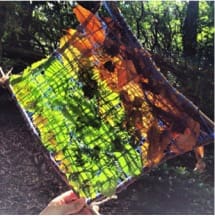
Our Reggio Emilia inspired approach values creativity and the use of open-ended materials. Parents can set up a simple creative space using natural objects collected outdoors. Leaves, small sticks, pebbles, flowers, and mud can all become art materials.
Children might create leaf pictures, build small stick houses, or design patterns using stones and petals. There is no “right” way to create. The focus is on exploration and expression. Parents can support the process by noticing and commenting on the child’s ideas, such as “I see you used lots of small stones in your design.”


Building and Problem Solving
Both Forest School and Reggio Emilia encourage hands-on learning. Building structures with loose parts is a great way to support problem solving. Parents and children can build simple shelters, towers, or bridges using sticks, logs, cardboard boxes, or blankets. For example, children may try to build a small “den” in the garden using sticks and a cloth sheet. The child might experiment with balance and positioning while the parent offers encouragement. This type of play helps develop persistence, spatial thinking, and teamwork.
Storytelling with the Environment
Nature provides endless inspiration for imaginative play. Parents can invite their child to create stories using natural objects as characters. A pinecone might become a hedgehog, a stick might be a magic wand, and stones might represent a family of animals.
Parents can join in by asking questions such as, “Where is the hedgehog going?” or “What adventure will happen next?” This kind of storytelling builds language skills and allows children to express their ideas freely.
Slow, Child-Led Play
A key principle of the Inspirations Approach is allowing children time to explore deeply. Instead of rushing between activities, parents can follow the child’s interests. If a child becomes fascinated with digging in the soil or watching insects, parents can support that curiosity by observing together and discussing what they see.
This slower pace helps children develop concentration, independence, and a strong connection with the natural world.
Play inspired by the Inspirations Approach focuses on curiosity, creativity, and exploration. By spending time outdoors, using natural materials, encouraging storytelling, and allowing children to lead their play, parents can support important developmental skills. These simple experiences not only help children learn but also create meaningful moments of connection between parent and child.
-Nicola